
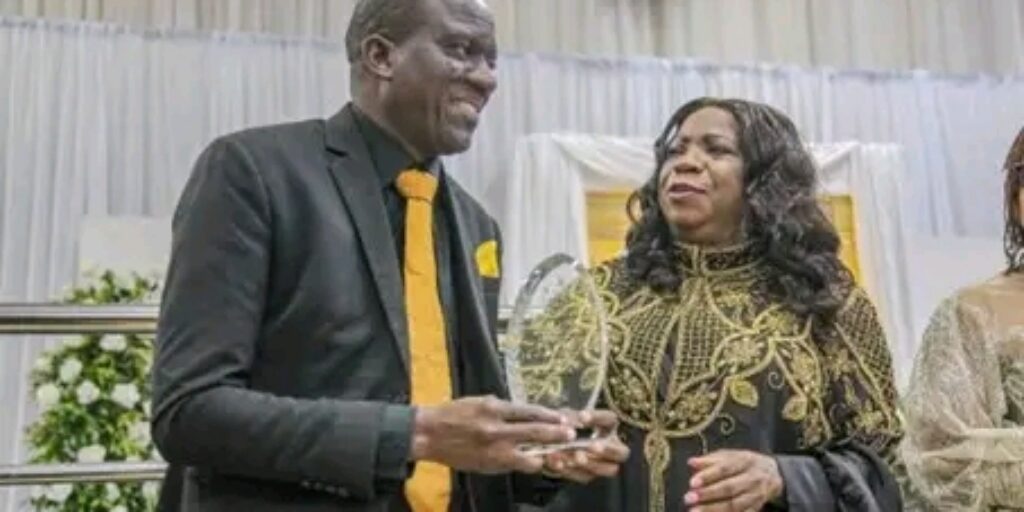
When Her Honour Vice President Mutale W.K. Nalumango presented Lloyd Mushauko with Zambia’s Gender Champion award, it marked a moment of national recognition for a career built quietly but consistently at the intersection of law enforcement and gender justice.
A serving officer in the Zambia Police Service and a leading figure in its Gender Unit, Mushauko has spent years working where few police officers go into the spaces where harmful norms are formed and where violence against women and girls begins.
Building gender justice from inside an institution
Within the Zambia Police Service, Mushauko has contributed to the development of gender guidelines, monitoring frameworks, and survivor-centred response tools that have changed how the institution handles gender-related cases. His work has pushed for accountability and more equitable service delivery, not from outside the system, but from within it.
That insider positioning is deliberate. Mushauko holds that gender-based violence is not a private matter. It is a societal failure that undermines development, safety, and human dignity, and that institutions like the police have both the responsibility and the reach to respond differently.
Engaging beyond the uniform
His influence extends well beyond his professional role. Mushauko serves as a MenCare and MenEngage Africa ambassador, a HeForShe Champion, and an I Care About Her (ICAH) Champion. Through these platforms, he has worked with communities, civil society organisations, traditional leaders, and government institutions across Zambia to shift the norms that drive violence and to bring men and boys in as active partners for change.
“It was deeply humbling and gratifying to receive this award, which I dedicate to the people of Zambia, whose support makes this work possible,” Mushauko said.
The recognition has been noted beyond Zambia’s borders. Jean-Marie Nkurunziza, MenCare Regional Program Specialist at Sonke Gender Justice, said Mushauko “shows what MenCare leadership looks like, men choosing care, accountability, and equality. When men step up, families and nations change.”
Recognition as a reminder
The Vice President’s award reflects the significance of these contributions — and signals growing institutional acknowledgement that gender equality requires champions inside government and law enforcement, not only in civil society.
For Zambia, where gender-based violence remains a serious challenge, Mushauko’s career offers a clear lesson: lasting change demands both policy and presence — someone willing to show up, challenge entrenched attitudes, and build the trust that makes communities feel safe enough to report abuse and demand better.
His recognition as Gender Champion is not a conclusion. It is a mandate to keep going.


